




Action spectrum of photosynthesis was discovered by
a. Calvin
b. Engelmann
c. Blackman
d. Hill
Answer
 Verified
600.9k+ views
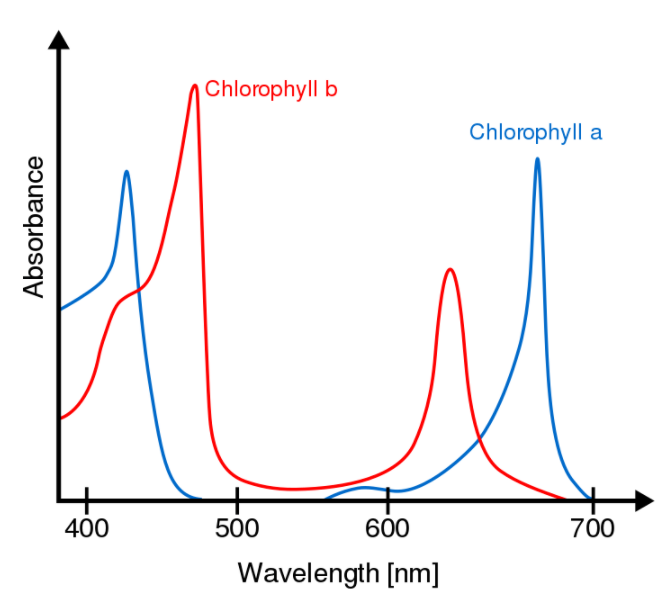
Hint: A graph of the rate of biological efficacy plotted against the wavelength of light is called an action spectrum. It is linked to the absorption spectrum in many systems. Accurately, it describes the inverse quantity of light required to suggest a constant response.
Complete answer:
Theodor Wilhelm Engelmann was a German botanist, university professor, and musician whose experiment ascertained the action spectrum of photosynthesis in 1882. He originated that bacteria accrued in the region of blue and red light of the split spectrum. He consequently discovered the cause of the different wavelengths of the light on photosynthesis and at that time he determined the first action spectrum of photosynthesis.
The Calvin cycle or C3 cycle is a sequence of biochemical redox reactions that occur in the stroma of chloroplast in photosynthetic organisms. The cycle was discovered by Melvin Calvin et al. by using the radioactive isotope carbon-14 in 1950.
Blackman in 1905 articulated the law of limiting factors. The liberation of oxygen during the light-dependent steps in photosynthesis was projected and confirmed by British biochemist Robin Hill.
Hence, the correct answer is option (B).
Note: Engelman splits light into its constituents by the prism and then elucidated Cladophora placed in a suspension of aerobic bacteria. He concluded that bacteria accumulated in the expanse of blue and red light of the split spectrum. He consequently discovered the cause of the different wavelengths of light on photosynthesis and plotted the key action spectrum of photosynthesis. Other examples involve repression of melatonin by wavelength and diversity of hazard functions, connected to tissue damage from visible and near-visible light.
Complete answer:
Theodor Wilhelm Engelmann was a German botanist, university professor, and musician whose experiment ascertained the action spectrum of photosynthesis in 1882. He originated that bacteria accrued in the region of blue and red light of the split spectrum. He consequently discovered the cause of the different wavelengths of the light on photosynthesis and at that time he determined the first action spectrum of photosynthesis.
The Calvin cycle or C3 cycle is a sequence of biochemical redox reactions that occur in the stroma of chloroplast in photosynthetic organisms. The cycle was discovered by Melvin Calvin et al. by using the radioactive isotope carbon-14 in 1950.
Blackman in 1905 articulated the law of limiting factors. The liberation of oxygen during the light-dependent steps in photosynthesis was projected and confirmed by British biochemist Robin Hill.
Hence, the correct answer is option (B).
Note: Engelman splits light into its constituents by the prism and then elucidated Cladophora placed in a suspension of aerobic bacteria. He concluded that bacteria accumulated in the expanse of blue and red light of the split spectrum. He consequently discovered the cause of the different wavelengths of light on photosynthesis and plotted the key action spectrum of photosynthesis. Other examples involve repression of melatonin by wavelength and diversity of hazard functions, connected to tissue damage from visible and near-visible light.
Recently Updated Pages
Master Class 11 Social Science: Engaging Questions & Answers for Success

Master Class 11 Physics: Engaging Questions & Answers for Success
Master Class 11 Maths: Engaging Questions & Answers for Success
Master Class 11 Economics: Engaging Questions & Answers for Success
Master Class 11 Computer Science: Engaging Questions & Answers for Success
Master Class 11 Chemistry: Engaging Questions & Answers for Success
Trending doubts
One Metric ton is equal to kg A 10000 B 1000 C 100 class 11 physics CBSE
There are 720 permutations of the digits 1 2 3 4 5 class 11 maths CBSE
1 Quintal is equal to a 110 kg b 10 kg c 100kg d 1000 class 11 physics CBSE
State and prove Bernoullis theorem class 11 physics CBSE
Difference Between Prokaryotic Cells and Eukaryotic Cells
Which among the following are examples of coming together class 11 social science CBSE