




A digestive enzyme salivary amylase (present in saliva) begins digestion of
A. Protein
B. Nucleic acids
C. Fats
D. Carbohydrates
Answer
 Verified
620.1k+ views
Hint: The food after chewing for some time feels sweet because of the presence of salivary amylase enzymes in the mouth which start the digestion of the food.
Complete answer:
The correct answer is (D).
The salivary glands are present in the buccal cavity/ mouth which secrete the saliva and the carbohydrate digesting enzyme called salivary amylase. The saliva is responsible for mixing up the food and thus lubricates it to make its further movement easier in the alimentary canal whereas the enzyme salivary amylase starts the digestion of carbohydrates by breaking them and converting into a disaccharide called maltose. The hydrolytic activity of this carbohydrate breaking enzyme takes place at pH of about 6.8. This enzyme is responsible for hydrolyzing around 30 percent of the starch.
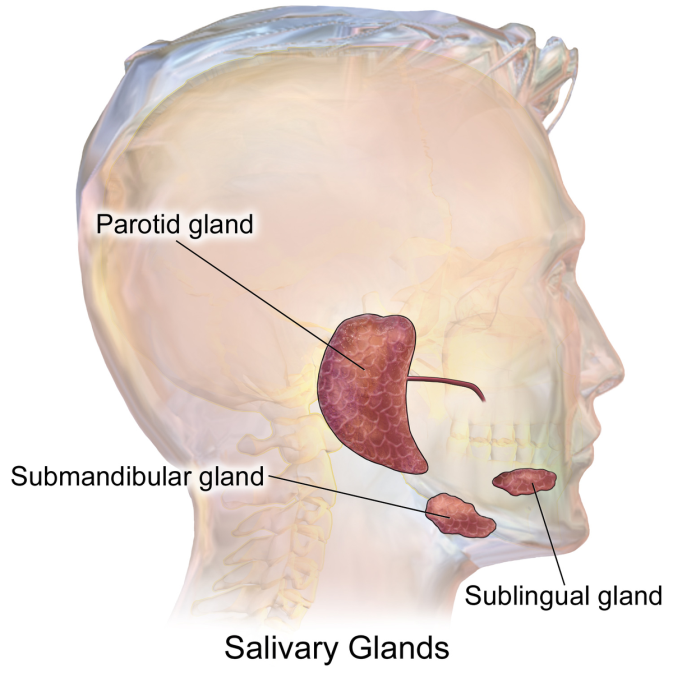
This hydrolyzed starch is further passed on to the esophagus and through peristaltic movements, it finally reaches the small intestine via the stomach where further digestion of carbohydrates takes place and it gets converted into the simpler units (monosaccharide) called glucose.
Salivary glands along with saliva and salivary amylase also secrete another enzyme called lysozyme, which have antibacterial properties.
There are three types of salivary glands present in the mouth-
- Parotid gland which are present in the cheeks,
- Submandibular glands which are present in the lower jaws; and
- Sublingual glands which are present below the tongue.
Note: The salivary glands are present in the buccal cavity and are responsible only for the digestion of the carbohydrates. Digestion of other components of food like fats, proteins etc. starts at other specific sites.
Complete answer:
The correct answer is (D).
The salivary glands are present in the buccal cavity/ mouth which secrete the saliva and the carbohydrate digesting enzyme called salivary amylase. The saliva is responsible for mixing up the food and thus lubricates it to make its further movement easier in the alimentary canal whereas the enzyme salivary amylase starts the digestion of carbohydrates by breaking them and converting into a disaccharide called maltose. The hydrolytic activity of this carbohydrate breaking enzyme takes place at pH of about 6.8. This enzyme is responsible for hydrolyzing around 30 percent of the starch.
This hydrolyzed starch is further passed on to the esophagus and through peristaltic movements, it finally reaches the small intestine via the stomach where further digestion of carbohydrates takes place and it gets converted into the simpler units (monosaccharide) called glucose.
Salivary glands along with saliva and salivary amylase also secrete another enzyme called lysozyme, which have antibacterial properties.
There are three types of salivary glands present in the mouth-
- Parotid gland which are present in the cheeks,
- Submandibular glands which are present in the lower jaws; and
- Sublingual glands which are present below the tongue.
Note: The salivary glands are present in the buccal cavity and are responsible only for the digestion of the carbohydrates. Digestion of other components of food like fats, proteins etc. starts at other specific sites.
Recently Updated Pages
Master Class 10 Computer Science: Engaging Questions & Answers for Success

Master Class 10 General Knowledge: Engaging Questions & Answers for Success
Master Class 10 English: Engaging Questions & Answers for Success
Master Class 10 Social Science: Engaging Questions & Answers for Success
Master Class 10 Maths: Engaging Questions & Answers for Success
Master Class 10 Science: Engaging Questions & Answers for Success
Trending doubts
Explain the Treaty of Vienna of 1815 class 10 social science CBSE
Who Won 36 Oscar Awards? Record Holder Revealed
What is the median of the first 10 natural numbers class 10 maths CBSE
What is the name of Japan Parliament?
Why is it 530 pm in india when it is 1200 afternoon class 10 social science CBSE
Select the word that is correctly spelled a Twelveth class 10 english CBSE