



World Hepatitis Day 2026: Protecting Lives and Raising Awareness
World Hepatitis Day is observed annually on July 28 to increase awareness about viral hepatitis and the life-saving measures available to prevent and treat it. Established by the World Health Organisation (WHO), this day commemorates the birthday of Nobel laureate Dr Baruch Blumberg, who discovered the Hepatitis B virus and developed its first vaccine. Viral hepatitis—types A, B, C, D, and E—affects over 287 million people worldwide, causing more than 1.3 million deaths every year. World Hepatitis Day 2026 highlights the importance of testing, vaccination, treatment, and the global goal of eliminating hepatitis as a public health threat by 2030.
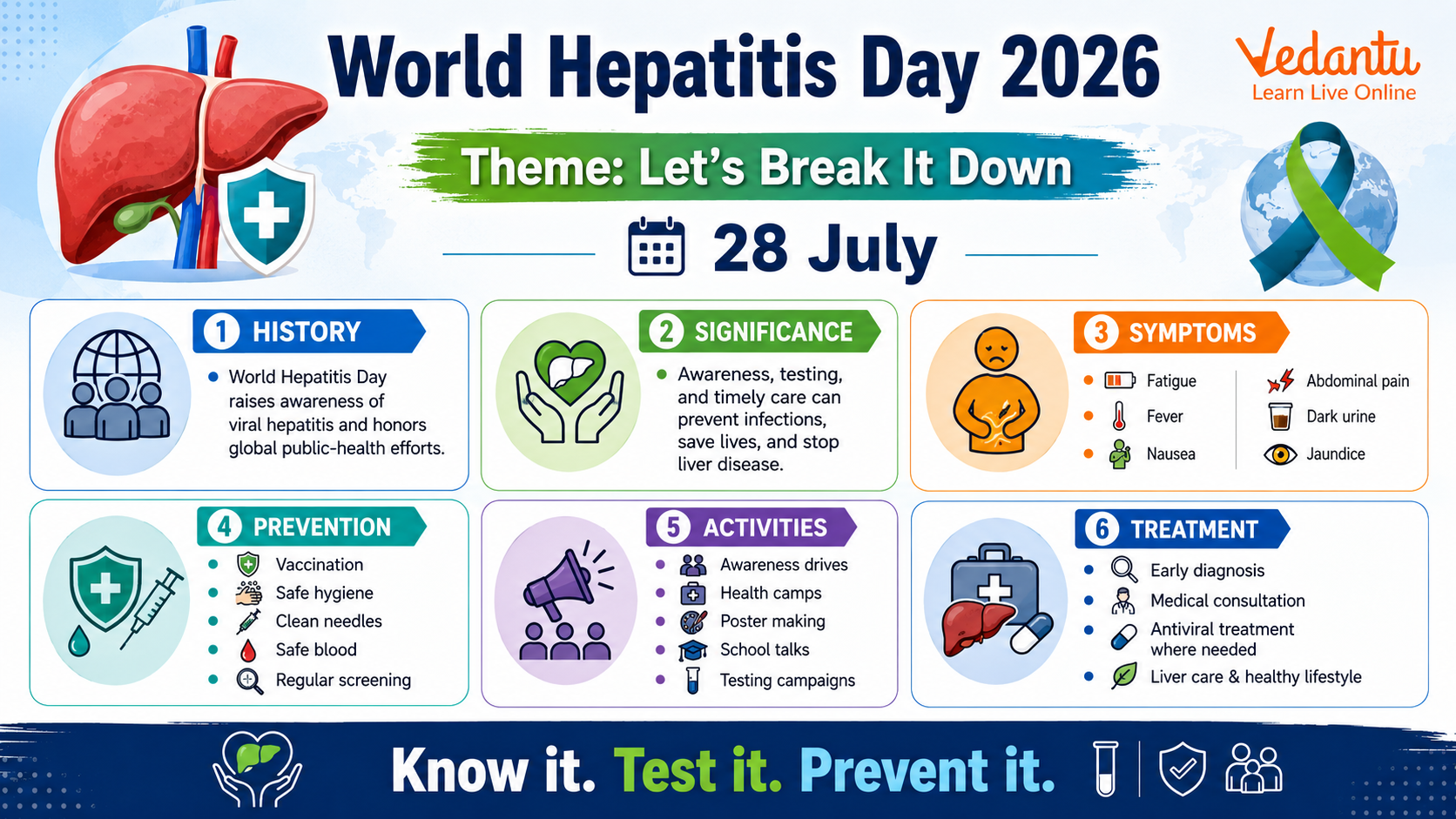
World Hepatitis Day 2026 Theme
The theme for World Hepatitis Day 2026 is “Let’s Break It Down”, which highlights the global push to eliminate hepatitis as a public health threat by 2030. This campaign, led by the World Hepatitis Alliance, focuses on removing barriers in healthcare, simplifying testing and treatment, and integrating these services into primary care. It also emphasises expanding access to hepatitis B birth-dose vaccinations, providing fast and affordable cures for hepatitis C, and addressing stigma by ensuring affected communities are treated with dignity. By equipping individuals with knowledge and streamlining care, the theme aims to empower communities and accelerate progress toward a hepatitis-free world.
History and Significance of World Hepatitis Day
Date: 28 July, chosen to honour Dr. Baruch Blumberg.
Purpose: Raise awareness about the silent epidemic of viral hepatitis and encourage governments, healthcare providers, and communities to provide access to testing, vaccination, and treatment.
Global Burden: Millions of people are unaware of their infection due to asymptomatic progression, making education and early diagnosis critical.
World Hepatitis Day 2026 Theme: Focuses on awareness, prevention, and breaking myths and stigma around hepatitis.
Symptoms and Risks of Hepatitis
Fatigue, loss of appetite, nausea, and vomiting
Abdominal pain near the liver
Dark urine, pale stools, and jaundice (yellowing of skin and eyes)
Chronic infection can lead to cirrhosis or liver cancer
Prevention and Vaccination
Vaccination - Hepatitis A & B vaccines are effective; Hepatitis B vaccination at birth reduces the risk of Hepatitis D.
Safe Practices - Avoid sharing razors, needles, and unsterilized medical instruments.
Food and Water Hygiene - Drink filtered water and wash hands regularly.
Safe Sex - Use barrier protection to prevent Hepatitis B.
Regular Screening - Especially for high-risk individuals or previous exposure.
Treatment Options
Acute Hepatitis (A & E) - Supportive care and rest.
Chronic Hepatitis B - Antivirals and liver monitoring.
Chronic Hepatitis C - Direct-acting antivirals (DAAs) with high cure rates.
Hepatitis D - Managed along with Hepatitis B under specialist care.
Activities to Celebrate World Hepatitis Day 2026
Testing Camps - Free or discounted hepatitis screenings.
Vaccination Drives - Promote immunisation for Hepatitis A and B.
Awareness Campaigns - Social media, workshops, and educational seminars.
Community Engagement - Encourage participation in webinars, local programs, and school events.
Digital Initiatives - Share accurate information online and combat myths.
Conclusion
World Hepatitis Day 2026 serves as a global reminder to break the silence around viral hepatitis. Through education, vaccination, testing, and awareness campaigns, individuals and communities can reduce infection, save lives, and work toward the WHO goal of eliminating hepatitis as a public health threat by 2030. Let’s unite on 28 July to raise awareness, promote prevention, and support those affected by viral hepatitis worldwide.
FAQs on World Hepatitis Day 2026: Theme, Prevention, and Global Action
1: When is World Hepatitis Day celebrated?
World Hepatitis Day is observed annually on 28 July worldwide.
2: What is the World Hepatitis Day 2026 theme?
The World Hepatitis Day 2026 theme is “Let’s Break It Down”, emphasizing awareness, early diagnosis, prevention, vaccination, simplifying healthcare access, and breaking the stigma surrounding viral hepatitis. It focuses on empowering individuals and communities with knowledge while promoting global efforts to eliminate hepatitis by 2030.
3: What is viral hepatitis?
Viral hepatitis is an inflammation of the liver caused by viruses A, B, C, D, or E. Chronic Hepatitis B and C are major causes of liver cancer and death.
4: How can I participate in World Hepatitis Day 2026?
Get tested, promote vaccination, join awareness campaigns, and share information on social media using #WorldHepatitisDay.
5: Can hepatitis be prevented or treated?
Yes. Vaccines are available for Hepatitis A and B, and effective treatments exist for Hepatitis B, C, and D. Early diagnosis improves outcomes.



