



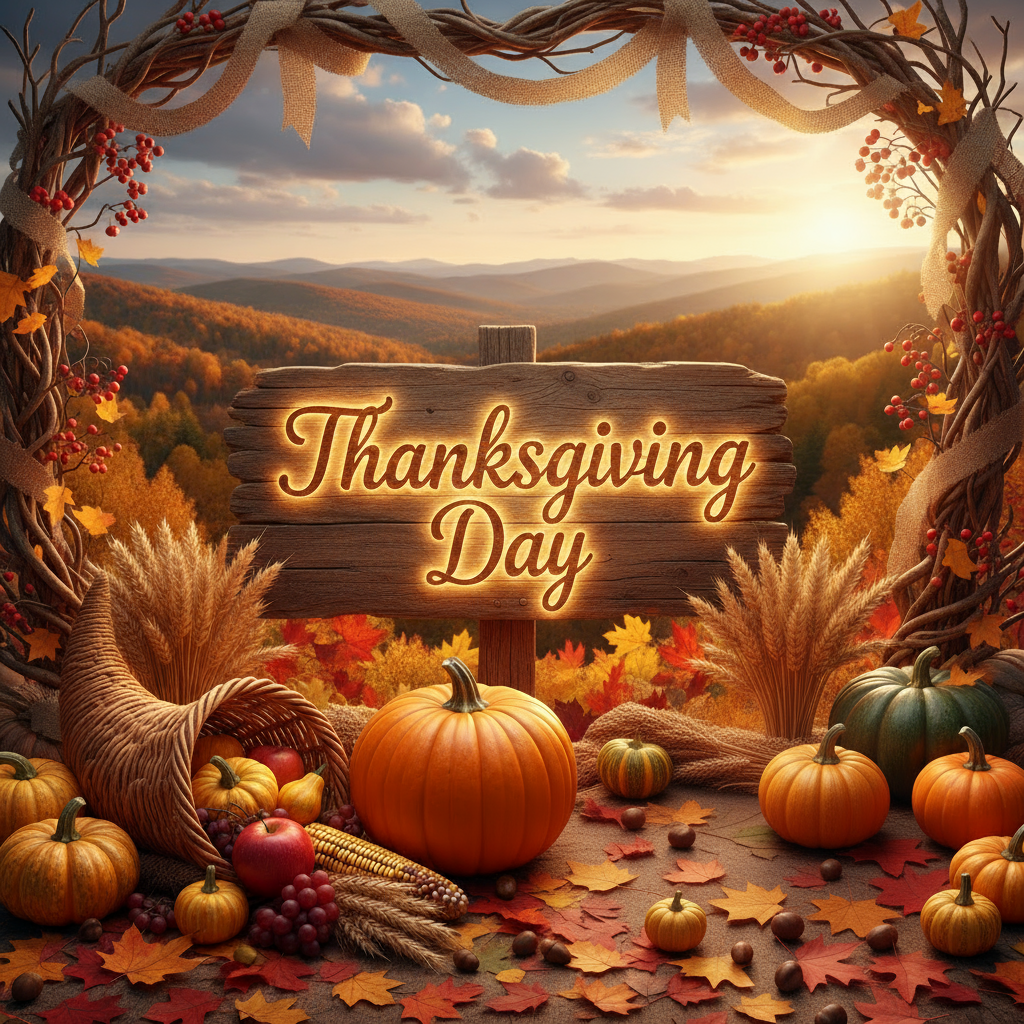
Thanksgiving Day is one of the most beloved and widely celebrated holidays in the United States and Canada. It is a day dedicated to expressing gratitude, togetherness, and appreciation for the blessings of the past year. Families and friends gather around a warm meal, reflect on what they are thankful for, and celebrate the spirit of sharing and community.
In 2025, Thanksgiving Day in the United States falls on Thursday, November 27, while Canada celebrates it on Monday, October 13, 2025. Though rooted in history, the values Thanksgiving represents — gratitude, unity, and generosity — are universally meaningful and relevant for students and readers across the world.
What is Thanksgiving Day?
Thanksgiving Day is an annual national holiday observed primarily in the United States and Canada. It originated as a harvest festival — a tradition of giving thanks for a successful harvest season and the blessings of the year gone by.
Over centuries, it evolved from a religious and agricultural observance into a beloved cultural tradition centred around family reunions, a grand feast, and a spirit of gratitude. Today, it is considered one of the biggest holidays of the year in North America, often marking the beginning of the festive holiday season leading into Christmas and New Year.
The holiday also carries deep historical roots connected to the early European settlers in America and their relationship with the indigenous Native American peoples.
Thanksgiving Day 2025 — Key Details
History of Thanksgiving Day
The First Thanksgiving — 1621
The origin of Thanksgiving in America dates back to 1621, when the Pilgrims — a group of English Separatists who had sailed to the New World aboard the Mayflower in 1620 — held a three-day feast to celebrate their first successful harvest in Plymouth, Massachusetts.
The journey had been incredibly difficult. Of the 102 passengers who made the voyage, many did not survive the harsh winter of 1620–21. Those who did survive were greatly helped by the Wampanoag Native Americans, particularly a man named Squanto, who taught the Pilgrims how to cultivate crops, catch fish, and survive in the unfamiliar land.
The harvest feast of 1621 was shared between approximately 90 Wampanoag people and 53 Pilgrims — making it a symbol of cooperation and goodwill between the two groups, though the relationship between European settlers and Native Americans would grow increasingly troubled in the years that followed.
From Tradition to National Holiday
For many years after 1621, Thanksgiving was celebrated irregularly, with different colonies and states observing it on different dates.
1789 — President George Washington proclaimed the first national Thanksgiving on November 26, calling it a day of public thanksgiving and prayer.
1817 — New York became the first state to officially adopt Thanksgiving as an annual holiday.
1827 — Writer and editor Sarah Josepha Hale began a decades-long campaign to make Thanksgiving a national holiday, writing letters to five US presidents over 36 years.
1863 — President Abraham Lincoln, in the midst of the Civil War, officially proclaimed Thanksgiving a national holiday to be observed on the last Thursday of November every year. This is widely considered the foundation of the modern Thanksgiving holiday.
1939–1941 — President Franklin D. Roosevelt moved Thanksgiving to the second-to-last Thursday of November to extend the Christmas shopping season, causing significant public debate. Congress eventually passed a law in 1941 fixing Thanksgiving as the fourth Thursday of November — where it remains today.
Thanksgiving in Canada
Canada's Thanksgiving has different historical roots. It is believed to have originated with English explorer Martin Frobisher, who held a ceremony of thanks in 1578 in Newfoundland for surviving his voyage — predating the American Pilgrims by over 40 years. Canadian Thanksgiving is observed on the second Monday of October each year.
The Meaning and Significance of Thanksgiving
At its heart, Thanksgiving is about much more than a meal. It carries deep meaning on several levels:
Gratitude — It is a dedicated day to pause, reflect, and express thanks for health, family, friends, opportunities, and all the good in one's life.
Family and Togetherness — Thanksgiving is one of the most travelled holidays in America. Families reunite from across the country to share a meal and spend time together.
Sharing and Generosity — The spirit of Thanksgiving encourages giving back. Food drives, community meals, and charity events take place across the country to ensure everyone has something to be thankful for.
Cultural Identity — For Americans, Thanksgiving is a cornerstone of national identity — a tradition that connects generations and tells the story of the nation's founding and its values.
Universal Relevance — For students and readers around the world, Thanksgiving teaches a simple but powerful lesson: taking time to be grateful improves mental well-being, strengthens relationships, and fosters a positive outlook on life.
How is Thanksgiving Day Celebrated?
Thanksgiving is celebrated with a rich mix of traditions, food, parades, and community activities.
The Thanksgiving Feast
The centrepiece of Thanksgiving is undoubtedly the grand feast. Traditional Thanksgiving foods include:
Roast Turkey — The most iconic symbol of Thanksgiving, so much so that the holiday is often informally called "Turkey Day.
Stuffing — A savoury mixture of bread, herbs, and vegetables baked inside or alongside the turkey.
Mashed Potatoes and Gravy — A classic comfort food staple of the Thanksgiving table.
Cranberry Sauce — A sweet and tangy accompaniment that has been part of the feast since early Thanksgiving celebrations.
Pumpkin Pie — The quintessential Thanksgiving dessert, made from spiced pumpkin filling in a pastry crust.
Sweet Potato Casserole, Green Bean Casserole, and Cornbread — Other beloved dishes that vary by family tradition and region.
The Macy's Thanksgiving Day Parade
One of the most iconic Thanksgiving traditions is the Macy's Thanksgiving Day Parade in New York City. Held every year since 1924, it features enormous helium balloon characters, floats, marching bands, and live performances. It is watched by millions of people in person and on television across America.
Presidential Turkey Pardon
A beloved and lighthearted tradition since 1989, the sitting US President "pardons" a turkey on the eve of Thanksgiving, sparing it from becoming part of the feast. The pardoned turkey is then sent to live out its days on a farm.
Football
Thanksgiving and American football are deeply intertwined. NFL Thanksgiving games have been a tradition since 1920, and families across America gather around the television to watch games while enjoying their feast.
Black Friday
Thanksgiving marks the unofficial start of the Christmas shopping season. The day after Thanksgiving — known as Black Friday — is one of the biggest shopping days of the year in the United States, with massive sales and discounts in stores and online.
Volunteering and Giving Back
Many Americans spend part of Thanksgiving volunteering at food banks, soup kitchens, and community shelters — feeding those who are less fortunate and embodying the true spirit of the holiday.
Thanksgiving Day Around the World
While Thanksgiving is most associated with the USA and Canada, similar harvest festivals and gratitude celebrations exist across many cultures:
Erntedankfest — Germany's harvest thanksgiving festival held in October.
Chuseok — A major Korean harvest festival celebrated in autumn, where families gather, share food, and honour ancestors.
Pongal — A South Indian harvest festival celebrated in January, giving thanks for a successful harvest.
Sukkot — A Jewish harvest festival during which families build temporary shelters and give thanks.
Homowo — A harvest festival of the Ga people of Ghana, celebrated with traditional food and family gatherings.
This shows that the spirit of giving thanks for nature's bounty and celebrating togetherness is truly universal.
Thanksgiving and Gratitude — A Lesson for Students
For students, Thanksgiving carries an important life lesson beyond history and tradition — the practice of gratitude.
Research in psychology consistently shows that people who regularly practise gratitude are happier, more resilient, more empathetic, and perform better academically and socially. Gratitude shifts our focus from what we lack to what we have.
Simple ways students can practise gratitude:
Maintain a gratitude journal — write three things you are thankful for each day
Express appreciation to teachers, parents, and friends sincerely
Volunteer or help someone in need
Reflect on personal growth — what have you learned this year?
Celebrate small wins and everyday blessings
Thanksgiving is a reminder that gratitude is not just a feeling — it is a habit that can transform your life.
Conclusion
Thanksgiving Day 2025 is a celebration of gratitude, history, family, and the enduring human spirit of togetherness. Whether you are studying it as part of world cultures, preparing a school essay, or simply curious about global traditions — Thanksgiving teaches a timeless lesson: that pausing to say "thank you" is one of the most powerful things any of us can do.
On November 27, 2025, millions of people across the United States will gather around a table, hold hands, and give thanks. And in that simple act lies something deeply beautiful — a reminder that no matter how busy or difficult life gets, there is always something to be grateful for.
#ThanksgivingDay2025 #Thanksgiving #WorldCultures #GratitudeDay #VedantuBlog #StudentLearning #GlobalHolidays
FAQs
1. When is Thanksgiving Day 2025 in the USA?
Thanksgiving Day 2025 in the United States falls on Thursday, November 27, 2025. It is observed on the fourth Thursday of November every year as a federal public holiday.
2. When is Thanksgiving Day 2025 in Canada?
Canada celebrates Thanksgiving on Monday, October 13, 2025. Canadian Thanksgiving is observed on the second Monday of October each year, which is earlier than the American Thanksgiving.
3. What is the origin and history of Thanksgiving?
Thanksgiving traces its origins to 1621, when the Pilgrims and the Wampanoag Native Americans shared a three-day harvest feast in Plymouth, Massachusetts. It became a national holiday in the USA in 1863 when President Abraham Lincoln officially proclaimed it. Today it is one of America's most celebrated national holidays.
4. Why is turkey eaten on Thanksgiving Day?
Turkey became the traditional Thanksgiving meal largely due to its practicality and abundance in early America. Unlike chickens (which laid eggs) or cows (which produced milk), turkeys were raised primarily for meat and were plentiful. Over time, roast turkey became the defining symbol of the Thanksgiving feast, earning the holiday the nickname "Turkey Day.
5. What is the significance of the Macy's Thanksgiving Day Parade?
The Macy's Thanksgiving Day Parade is one of the world's largest parades, held annually in New York City since 1924. It features giant helium balloon characters, decorated floats, marching bands, and live performances. It is watched by over 50 million people on television and marks the traditional kickoff to the Christmas holiday season in America.
6. What does the cornucopia symbol mean in Thanksgiving?
The cornucopia, also known as the "horn of plenty," is a traditional Thanksgiving symbol. It is a horn-shaped basket overflowing with fruits, vegetables, and grains, representing abundance, harvest, and gratitude. It has been associated with harvest festivals since ancient Greek and Roman times.
7. Is Thanksgiving celebrated in India?
Thanksgiving is not a traditional Indian holiday. However, it is increasingly recognised and observed in India — particularly in international schools, among families with ties to the USA, and in corporate settings with American connections. The values of Thanksgiving — gratitude, family, and sharing — resonate universally across cultures.
8. What is Black Friday and how is it connected to Thanksgiving?
Black Friday is the day after Thanksgiving — falling on November 28, 2025 — and is one of the biggest shopping days of the year in the United States. Retailers offer massive discounts and sales, and millions of shoppers head to stores and online platforms to begin their Christmas shopping. It marks the unofficial start of the holiday shopping season.



