



When is Makar Sankranti 2026? Meaning, History, Rangoli
Makar Sankranti is one of the most important harvest festivals in India. It marks a major astronomical event when the Sun enters the zodiac sign Makara (Capricorn) and begins its northward journey, known as Uttarayan. This transition is considered highly auspicious and is celebrated with joy, gratitude, and cultural pride across the country.
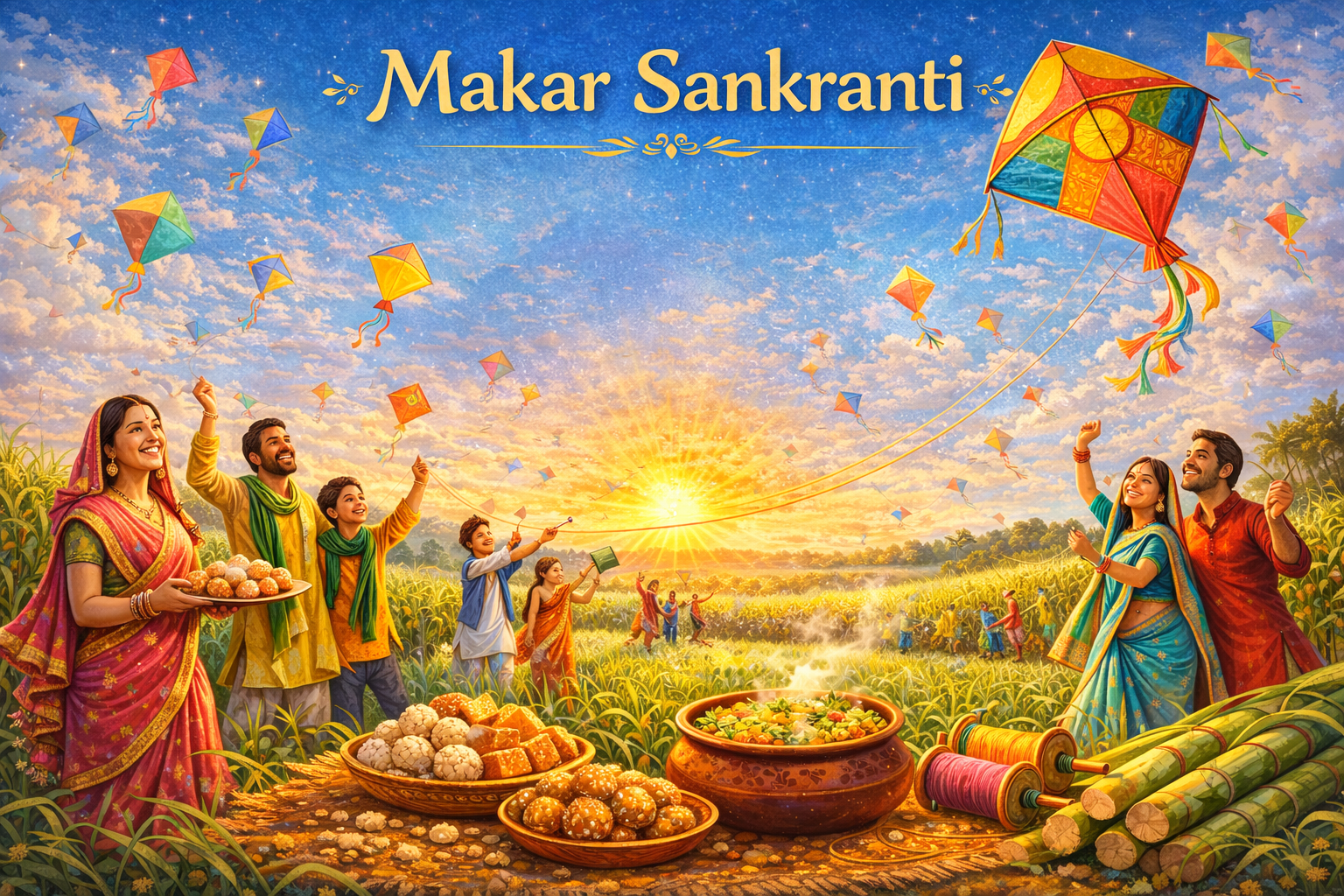
The Makar Sankranti festival symbolises the end of winter, the beginning of longer days, and a fresh start filled with positivity and prosperity. People greet each other with Happy Makar Sankranti wishes, prepare traditional food, decorate homes, and take part in regional celebrations.
Also Check: 80+ Makar Sankranti Wishes
When is Makar Sankranti 2026 Celebrated?
Many people search for Makar Sankranti 2026 to know the exact date and significance.
👉 Makar Sankranti 2026 will be celebrated on Wednesday, January 14, 2026.
Unlike many Indian festivals that follow the lunar calendar, Makar Sankranti is based on the solar cycle. This makes it a scientifically and astronomically important festival, as it marks the Sun’s movement into Capricorn and the end of the winter solstice period.
Makar Sankranti 2026 Panchang Timing
Makar Sankranti 2026: Date and Auspicious Time
Makar Sankranti marks the Sun’s entry into Capricorn (Makara), an important astronomical and spiritual event. In 2026, this transition happens on January 14, making it the official Sankranti day.
Sankranti Moment
Makara Sankranti Begins: January 14, 2026 at 03:13 PM
🕉 Auspicious Periods for Rituals
Best Time for Key Activities
Holy Bath (Snan): Early morning or during Punya Kaal
Sun Worship (Surya Arghya): During Punya Kaal
Charity (Til, Jaggery, Clothes): Maha Punya Kaal is best
Puja & Mantra: Abhijit Muhurat or after Sankranti moment
These timings follow traditional Hindu Panchangam practices used across India for Sankranti rituals.
What is the Makar Sankranti Festival? and Why Is It Important?
The Makar Sankranti festival highlights the close connection between nature, agriculture, and human life. It is especially important for farmers, as it marks the harvesting of winter crops such as wheat, sugarcane, and pulses.
The word Sankranti means “transition” and refers to the movement of the Sun from one zodiac sign to another. Among all Sankrantis, Makar Sankranti holds special importance because it marks the Sun’s entry into the zodiac sign Capricorn (Makara).
Since the festival is based on the solar cycle, it differs from most Hindu festivals that follow the lunar calendar. This strong link with astronomy and seasonal change gives the Sankranti festival a unique and respected place in Indian culture.
Why is Makar Sankranti Celebrated?
Many students and parents ask why Makar Sankranti is celebrated.
Makar Sankranti is celebrated to:
Thank the Sun God for warmth and energy
Mark the seasonal shift from winter to longer days
Celebrate agricultural success and food security
Encourage charity, sharing, and community bonding
From a CBSE learning perspective, this festival teaches respect for nature, scientific understanding of seasons, and social values like generosity and unity.
Makar Sankranti Historical and Astronomical Significance
Makar Sankranti is mentioned in ancient Indian texts and traditions and has strong connections with astronomy. The festival marks the Sun’s entry into the zodiac sign Capricorn, an important solar event that was carefully observed by early Indian scholars.
Spiritually, the beginning of Uttarayan is considered highly auspicious. It is believed to bring positive energy, spiritual growth, and fresh beginnings.
The significance of the Makar Sankranti festival can be understood through four key aspects:
Astronomical significance: It marks the start of Uttarayan, the Sun’s northward journey
Agricultural significance: It celebrates the harvest season and thanks nature for abundance
Spiritual significance: It is seen as a favourable time for charity, prayers, and self-purification
Social significance: It strengthens family bonds and community harmony
Traditional Rituals and Celebrations of Makar Sankranti
The way Makar Sankranti is celebrated may differ by region, but some rituals are commonly observed:
Holy river bathing is performed in rivers like the Ganga, Godavari, and Yamuna to symbolise purification
Charity and donation (daan) of food, clothes, and grains
Flying kites, especially in Gujarat and Rajasthan, symbolising freedom and joy
Cooking seasonal foods made with sesame (til) and jaggery (gur)
Each ritual reflects harmony between humans and the environment.
Makar Sankranti Rangoli and Decorations
Makar Sankranti rangoli is an important part of the festival, especially in Maharashtra, Karnataka, and South India. Rangoli designs are drawn at home entrances using coloured powders, rice flour, or flowers.
Popular Makar Sankranti rangoli themes include:
Sun motifs
Kites and sugarcane
Flowers and geometric patterns
Symbols of prosperity and harvest
Creating rangoli encourages creativity, cultural expression, and festive spirit among children and families.
Food and Festive Specialties
Food plays a central role in the Makar Sankranti festival. Traditional dishes vary by region but commonly include:
Til-gul sweets made from sesame and jaggery
Pongal dishes made with rice and lentils
Khichdi prepared with seasonal vegetables
Sugarcane and groundnuts
Sesame and jaggery are considered warming foods, suitable for winter and symbolic of sweetness and unity in relationships.
How Students Celebrate Makar Sankranti
In schools, Makar Sankranti is celebrated as a cultural and educational event. Students learn about:
Seasonal changes and solar movements
Indian agricultural practices
Cultural diversity across states
Values of sharing and gratitude
Activities like drawing rangoli, preparing charts, participating in cultural programmes, and discussing festival science help students connect learning with tradition.
Happy Makar Sankranti: Cultural Meaning
Saying Happy Makar Sankranti is more than a greeting—it represents hope, positivity, and new beginnings. Families exchange greetings, sweets, and blessings to spread happiness and strengthen relationships.
Makar Sankranti Celebrations Across India and Beyond
Makar Sankranti is mainly celebrated in India, but similar harvest festivals are also observed in Nepal and by Indian communities living abroad. These celebrations help preserve cultural traditions and pass them on to future generations.
Across India, the festival is known by different names and celebrated with unique regional customs.
Pongal in Tamil Nadu
Uttarayan in Gujarat (kite festival)
Magh Bihu in Assam
Khichdi in Uttar Pradesh and Bihar
Sankranti in Karnataka and Andhra Pradesh
Despite these regional variations, the core spirit of Sankranti remains the same — expressing gratitude for nature’s blessings, celebrating prosperity, and strengthening bonds within families and communities.
Why Makar Sankranti Is Different From Other Festivals
Unlike most festivals, makar sankranti date is based on the Sun’s movement, not the Moon. This makes it a scientifically significant festival and explains why makar sankranti 2026 date remains stable.
This blend of science, culture, and spirituality makes Sankranti unique.
Happy Makar Sankranti and Sankranti Greetings
Greeting loved ones with Happy Makar Sankranti or Happy Sankranti is a joyful tradition. These greetings express good wishes for health, success, and happiness.
Exchanging greetings strengthens relationships and spreads positivity during the festival.
Conclusion
The Makar Sankranti festival beautifully combines science, culture, and tradition. From understanding the astronomical importance of Makar Sankranti 2026 to enjoying rangoli, food, and celebrations, this festival offers meaningful lessons for students and families alike. It reminds us to respect nature, celebrate hard work, and welcome positivity into our lives.
Happy Makar Sankranti! 🌞🪁
FAQs on Makar Sankranti 2026: Date, Time, Significance, Traditions and Celebrations
1. What is Makar Sankranti and why is it celebrated?
Makar Sankranti is an important harvest festival marking the Sun's transition into the zodiac sign of Capricorn (Makar). It is celebrated to welcome longer days, signify new beginnings, and show gratitude for the harvest. The festival is observed with region-specific customs including kite flying, charity (daan), prayers, and sharing sweet dishes made from sesame seeds and jaggery.
2. Is Makar Sankranti on January 14 or January 15 in 2026?
Makar Sankranti falls on January 14, 2026. Some regions observe celebrations on January 15 due to local calendars or holidays, but the actual solar transition happens on January 14.
3. Why do we fly kites on Makar Sankranti?
Kite flying during Makar Sankranti symbolizes joy, freedom, and the arrival of longer, sunnier days. People gather on terraces to fly kites with friends and family, marking the festive spirit and sense of community.
4. Why do people wear black on Makar Sankranti?
Wearing black on Makar Sankranti is a tradition, especially in Maharashtra. Black clothes are believed to absorb warmth during winter, blending practicality with respect for cultural customs.
5. What are the main customs and rituals of Makar Sankranti?
Key customs and rituals include:
- Kite flying competitions
- Special prayers and morning baths
- Exchange of tilgul (sesame sweets) and greetings
- Bonfires (especially as Lohri in North India)
- Charity donations
- Wearing black attire (in some regions)
6. What is the significance of tilgul on Makar Sankranti?
Tilgul, or sesame and jaggery sweets, are exchanged as a symbol of harmony and good wishes. Giving and receiving tilgul represents sweetness in speech and relations, with the phrase “Tilgul ghya, goad goad bola” meaning ‘Take sweets, speak sweetly’.
7. What are some different names for Makar Sankranti across India?
Makar Sankranti is known by various names regionally:
- Pongal in Tamil Nadu
- Lohri in Punjab and Haryana
- Uttarayan in Gujarat
- Magh Bihu/Bhogali Bihu in Assam
- Poush Sankranti in West Bengal
- Khichdi Parv in Uttar Pradesh and Bihar
8. When is Makar Sankranti 2026?
Makar Sankranti 2026 will be celebrated on Wednesday, January 14, 2026. It marks the day when the Sun enters the zodiac sign Capricorn (Makara).
9. What is the Sankranti moment in 2026?
The Sankranti moment in 2026 occurs at 03:13 PM on January 14, when the Sun enters Capricorn.
10. What are some eco-friendly tips for celebrating Makar Sankranti?
For a joyful and sustainable festival, follow these tips:
- Avoid glass-coated 'manja' and use biodegradable materials
- Supervise children during kite flying
- Do not burn plastic in bonfires
- Include all community members in celebrations
- Practice gratitude and responsible giving
11. How is Makar Sankranti different from festivals based on the lunar calendar?
Makar Sankranti is based on the solar calendar, so its date remains nearly fixed as 14th January each year. Other Hindu festivals follow the lunar calendar and their dates change annually. This unique timing marks the Sun's entry into Capricorn, making the festival astronomically significant.
12. What are some traditional dishes prepared during Makar Sankranti?
Popular Makar Sankranti foods include:
- Tilgul (sesame and jaggery sweets)
- Pongal (sweet rice in Tamil Nadu)
- Khichdi (rice and lentil dish in North India)
- Pithe and puli (sweet dumplings in Bengal)
- Undhiyu (Gujarati mixed vegetable dish)
13. What is the best time to perform Makar Sankranti rituals?
The most auspicious time for rituals is from 03:13 PM to 05:45 PM on January 14, 2026, known as the Punya Kaal.
14. Why is Makar Sankranti important?
Makar Sankranti is important because it marks the Sun’s northward journey (Uttarayan), symbolising growth, positivity, and the beginning of the harvest season.



