








Why Negative Marking Matters in NEET 2027 & How to Avoid Common Mistakes
Negative marking in NEET can turn strong preparation into disappointing results if not tackled smartly. For NEET 2027 aspirants, understanding how to reduce negative marking is as important as covering the syllabus. This guide offers 8 practical tips on how to reduce negative marking in the NEET exam, so that every answer you attempt contributes positively to your final score and you feel more confident in the exam hall.
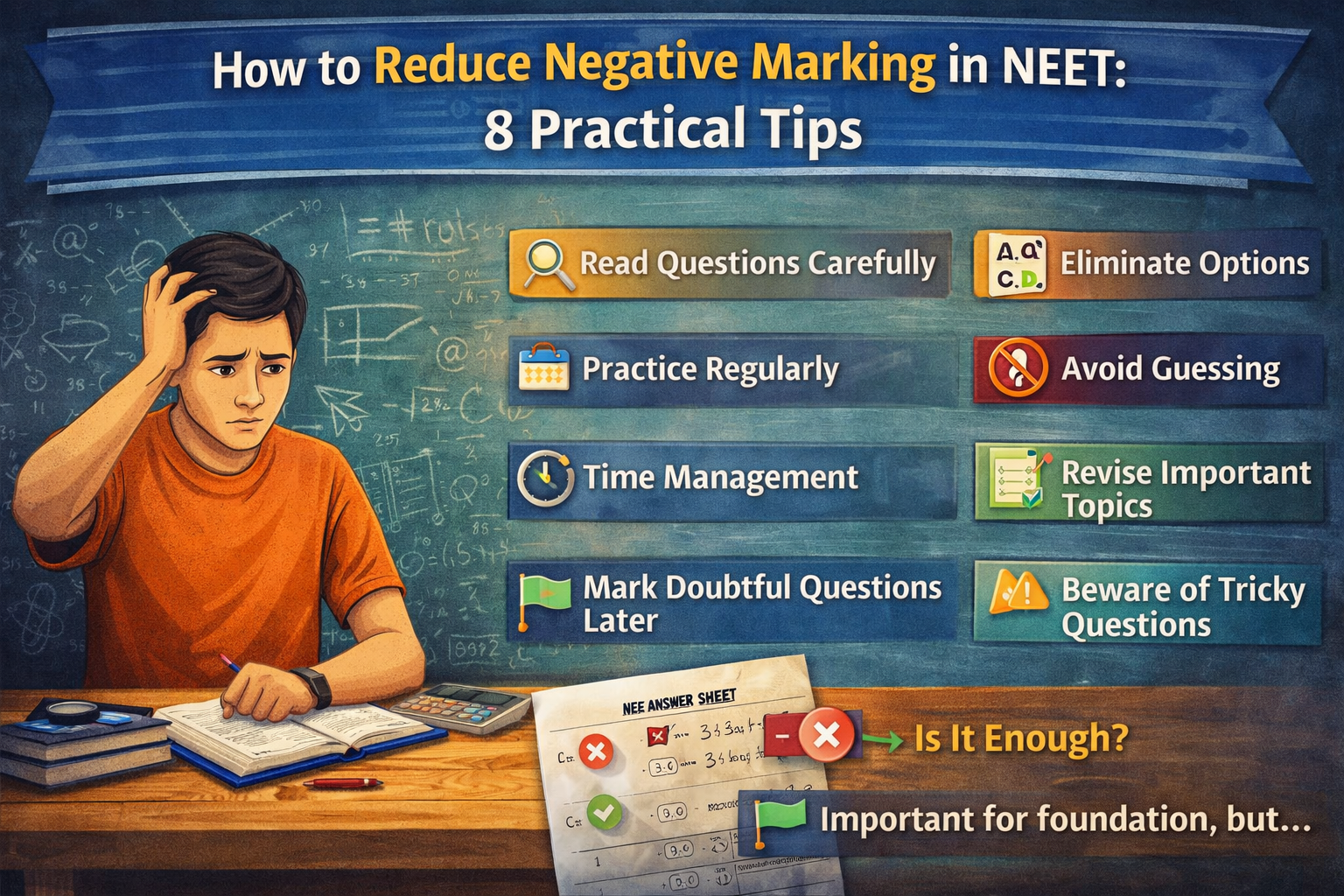
Why Is Negative Marking a Major Challenge in NEET 2027?
In NEET 2027, like previous years, each incorrect answer deducts one mark from your score. The pressure to attempt maximum questions often leads to hurried guesses or careless mistakes. Since even a few wrongly marked answers can lower your rank and impact your medical college options, learning how to reduce negative marking in NEET is crucial for all aspirants aiming for MBBS and BDS seats.
8 Tips On How To Reduce Negative Marking In NEET Exam
Here are the most effective strategies to avoid common pitfalls and protect your marks in NEET 2027:
Understand the Question Carefully: Read each question and all options attentively before making a choice. Sometimes terms like “except,” “incorrect,” or “not true” can change the entire meaning. Highlight keywords while practicing at home, so you build this habit.
Avoid Random Guesswork: Guessing without eliminating any option often leads to negative marks. Try to attempt only when you’re sure or can confidently rule out two or three options.
Revise Concepts Regularly: Strong command over NCERT concepts, diagrams, and formulae minimizes silly mistakes. Revise weak topics frequently to reinforce your basics and reduce confusion.
Use Smart MCQ Techniques: Learn proven methods for handling multiple-choice questions, such as elimination, comparison, and educated guessing. Practicing these techniques regularly can boost your accuracy.
Manage Time—Don’t Rush: Rushing through the paper increases error rates. Allocate time for each section and keep a buffer for review. Practice full-length mock tests within the actual time limit to master this skill. You can explore detailed time management strategies for the NEET exam to further refine your pacing.
Mark Answers Carefully on OMR Sheet: Many candidates lose marks by filling the wrong bubble or not marking the OMR properly. Practice with OMR sheets during mock tests and always double-check question numbers while marking.
Maintain Composure Under Pressure: Anxiety and stress can cause even well-prepared students to make avoidable mistakes. Use calming techniques and mindfulness, and ensure you do not panic if a few questions seem tough. For support, you may find these ways to manage stress and anxiety during NEET preparation helpful.
Attempt Only When Reasonably Sure: In NEET, partial knowledge is risky. Attempt a question only if you’re at least 60-70% confident about the answer. If unsure, it’s often safer to skip than risk negative marking.
How to Reduce Negative Marking in NEET PG?
The rules of negative marking also apply to NEET PG, but the level of clinical application and question trickiness increases. The same strategies—strong conceptual understanding, cautious attempts, focused revision, and diligent practice—help decrease negative marking in NEET PG as well. Practicing with more clinical MCQs and paying attention to details in case-based questions is vital for PG aspirants.
Practical Steps to Reduce Negatives in NEET 2027 Preparation
To effectively reduce negatives in NEET, your preparation should include a variety of mock tests and previous year question papers. After each test, review not just wrong answers, but also those you left unattempted or guessed. Keep a notebook to track repeated mistakes, unclear topics, and the types of errors you make—such as misunderstanding the question, calculation slips, or OMR errors. Target these areas during weekly revisions. Students can also benefit from learning how to prepare effectively for NEET in the last month for a final boost in accuracy and confidence.
Common Mistakes That Lead to Negative Marking
Marking answers without reading the full question or all options
Misalignment between question numbers and OMR sheet entries
Losing focus from fatigue or exam pressure
Changing answers frequently without strong reason
Guessing based on memory without verifying the concept
Consistent practice with strategies for tackling multiple-choice questions in NEET can help avoid such errors during the actual test.
Making the Most of Your Practice
Your NEET 2027 preparation is incomplete without real exam simulation. Use full-length mock tests to practice managing time, accuracy, and OMR marking all at once. After every test, analyse which attempted answers resulted in incorrect marks and why. Adjust your approach for the next mock accordingly, keeping all 8 tips on how to reduce negative marking in NEET exam in focus.
Minimising negative marking is about awareness, discipline, and smart preparation—not just learning theory. By consistently applying these 8 tips, NEET 2027 aspirants can greatly improve their chances of securing a high rank and moving closer to their dream of a medical career.
FAQs on How to Reduce Negative Marking in NEET 2027: 8 Practical Tips
1. What is negative marking in the NEET exam?
Negative marking in the NEET exam means that marks are deducted for every incorrect answer.
This system encourages students to answer only when they are confident and helps maintain the quality of responses.
2. Why is it important to reduce negative marking in NEET?
Reducing negative marking in NEET helps you improve your overall score and ranking.
Careful question attempts reduce the risk of losing hard-earned marks due to incorrect guesses.
3. What are eight effective tips to avoid negative marking in NEET?
Eight effective tips to avoid negative marking in NEET include careful reading, time management, selective answering, and strategic guessing.
Read each question thoroughly before marking an answer.
Avoid making random guesses.
Mark only those answers you are confident about.
Manage your time efficiently.
Double-check your marked answers.
Eliminate obviously wrong options before choosing.
Stay calm to avoid careless mistakes.
Revise mock tests to recognize your common errors.
4. How can careful reading of questions help reduce negative marking?
Carefully reading each question can help you understand exactly what is asked and prevent mistakes.
This reduces the chances of misinterpreting data or confusing similar options.
5. What is the role of time management in minimizing negative marks in NEET?
Effective time management allows you to attempt all questions without rushing, reducing errors due to hasty answers.
6. Should I attempt doubtful questions in NEET or leave them?
It is generally better to leave questions you are unsure about to avoid the risk of negative marking.
7. How can mock test practice help in reducing negative marking?
Practicing with mock tests helps you identify your common mistakes and improve accuracy in actual NEET exams.
8. What is strategic guessing, and how can it help prevent negative marks in NEET?
Strategic guessing means eliminating wrong options first and then making an educated choice to reduce the chances of negative marking.
9. Can anxiety during the NEET exam increase the chances of negative marking?
Yes, exam anxiety can cause careless mistakes, which may lead to increased negative marking in NEET.
10. How can regularly revising concepts help minimize negative marking in NEET?
Regular revision strengthens your understanding and accuracy, lowering the risk of incorrect answers that lead to negative marks.
