



Nag Panchami is an important Hindu festival dedicated to the worship of Nag Devta, or serpent deities. Celebrated during the sacred month of Shravan, the festival represents devotion, protection, respect for nature and peaceful coexistence with wildlife.
Nag Panchami 2026 will be celebrated on Monday, 17 August 2026, in most parts of India. The Panchami tithi will begin on the afternoon of 16 August and end on the evening of 17 August. In Gujarat, where a different lunar-calendar tradition is followed, Nag Pancham will be observed on 1 September 2026.
This detailed guide answers common questions such as Nag Panchami kab hai, 2026 me Nag Panchami kab hai, when is Nag Panchami in 2026, and Nag Panchami kis tarikh ko hai. You will also find the puja vidhi, auspicious timings, wishes in Hindi and English, status messages, image ideas and rangoli suggestions.
Nag Panchami 2026 Date and Time
Here are the important Nag Panchami 2026 date and time details for New Delhi:
These timings are calculated for New Delhi. Sunrise, tithi and puja timings can vary slightly according to the devotee’s location, so readers should confirm the final muhurat using a trusted local Panchang.
Nag Panchami 2026 in Hindi
2026 में नाग पंचमी कब है?
2026 में नाग पंचमी सोमवार, 17 अगस्त 2026 को मनाई जाएगी। पंचमी तिथि 16 अगस्त को शाम 4 बजकर 52 मिनट पर शुरू होगी और 17 अगस्त को शाम 5 बजे समाप्त होगी। नई दिल्ली के लिए नाग पंचमी पूजा का शुभ मुहूर्त सुबह 5 बजकर 51 मिनट से 8 बजकर 29 मिनट तक है।
When Is Nag Panchami in 2026?
For anyone searching “when is Nag Panchami” or “when is Nag Panchami in 2026,” the direct answer is:
Nag Panchami 2026 is on Monday, 17 August 2026, in most parts of India.
The festival is observed on Shukla Paksha Panchami during the Hindu month of Shravan or Sawan. Panchami is the fifth lunar day, while Shukla Paksha refers to the waxing phase of the Moon. ause Hindu festivals are determined according to lunar tithis rather than fixed Gregorian dates, the Nag Panchami date changes every year.
What Is Nag Panchami?
Nag Panchami, also written as Naga Panchami or Nagpanchami, is a traditional festival honouring Nagas or serpent deities. Devotees generally worship symbolic images, paintings, idols or temple representations of Nag Devta.
The festival is observed during Shravan, a month closely associated with Lord Shiva. In Hindu iconography, Lord Shiva is often shown wearing a cobra around his neck. Serpent deities also appear in stories connected with Lord Vishnu, Lord Krishna, the Mahabharata and several regional traditions.
Nag Panchami combines religious devotion with an older cultural respect for nature. Snakes have traditionally been associated with water, fertility, agricultural land, protection and ecological balance. Why Is Nag Panchami Celebrated?
Nag Panchami is celebrated to honour serpent deities and seek blessings for the well-being, safety and prosperity of the family. Traditional observances also express gratitude towards snakes and acknowledge their role in nature.
1. Worship of Nag Devta
Devotees offer prayers to Nag Devta and seek protection from fear, danger and negative influences. Ananta, Vasuki, Shesha, Takshaka, Kaliya, Padma and Karkotaka are among the serpent deities remembered in different traditions.
2. Association With Lord Shiva
Lord Shiva is depicted with a cobra around his neck. For many devotees, worshipping Nag Devta during Shravan is therefore closely connected with devotion to Mahadev.
3. Respect for Nature
Snakes help maintain ecological balance by controlling populations of rodents and other animals. Nag Panchami can therefore be understood as a reminder to respect wildlife rather than fear or harm it. 4. Importance for Agricultural Communities
In many rural communities, snakes are associated with fields, soil and water sources. Traditional customs surrounding Nag Panchami reflect the relationship between agriculture, the monsoon season and the natural environment. 5. Prayers for Family Protection
Many devotees observe a fast and pray for the protection, prosperity and good health of their family members. Customs can differ considerably between regions and communities.
Popular Stories Associated With Nag Panchami
Several stories explain the religious importance of Nag Panchami. The versions may differ according to family, region and religious tradition.
The Story of Astika Muni and King Janamejaya
One of the best-known Nag Panchami stories is connected with King Janamejaya, who began a great serpent sacrifice known as Sarpa Satra or Nag Yagya.
According to tradition, the sage Astika intervened and persuaded the king to stop the sacrifice, saving the Nagas. This story is remembered as an example of mercy, wisdom and the protection of living beings. Drik Panchang identifies the Janamejaya–Astika narrative as an important Nag Panchami vrat katha.
Lord Krishna and Kaliya Nag
Another popular story describes Lord Krishna subduing the serpent Kaliya, who had polluted the waters of the Yamuna. Krishna defeated Kaliya but allowed him to live after the serpent surrendered.
The story is commonly interpreted as the victory of divine power over poison, fear, pride and harmful behaviour. Lord Shiva and Vasuki
Serpents have a prominent place in Shaivite traditions. The cobra around Lord Shiva’s neck is often interpreted as a symbol of fearlessness, control over death and mastery over destructive forces.
Nag Panchami Puja Vidhi at Home
Nag Panchami puja customs vary between households. The following is a simple and respectful puja method that can be followed at home.
Items Required for Nag Panchami Puja
You may arrange:
A clean image or idol of Nag Devta
An image or idol of Lord Shiva
A wooden platform or chowki
A clean red or yellow cloth
Flowers
Roli or kumkum
Turmeric
Akshat or unbroken rice
Sandalwood paste
Incense sticks
Ghee or oil lamp
Fruits and sweets
Water in a clean vessel
Homemade prasad
Choose items according to your family tradition and avoid unnecessary wastage.
Step-by-Step Nag Panchami Puja
1. Clean the Puja Area
Wake up early, bathe and clean the place where the puja will be performed. Place a clean cloth over a chowki and install the image or idol of Nag Devta.
2. Take a Sankalp
Sit calmly and take a sankalp to perform the puja with devotion. Remember Lord Shiva, Nag Devta and your chosen deity.
3. Light a Diya
Light a lamp and incense. Begin the worship by praying to Lord Ganesha for the removal of obstacles.
4. Offer Water and Puja Items
Offer water symbolically to the deity’s image or idol. Apply sandalwood paste, turmeric, roli and akshat. Offer fresh flowers, fruits and sweets.
5. Chant a Nag Devta Mantra
A simple mantra that devotees may chant is:
ॐ नाग देवताभ्यो नमः।
Om Nag Devatabhyo Namah.
Meaning: Salutations to the serpent deities.
Another simple prayer is:
ॐ नमः शिवाय।
Om Namah Shivaya.
Chant the mantra peacefully according to your capacity. The sincerity of the prayer is more important than the number of repetitions.
6. Read or Listen to Nag Panchami Katha
Read the story of Astika Muni and King Janamejaya or listen to a traditional Nag Panchami vrat katha with family members.
7. Offer Naivedya
Offer fruits, sweets, kheer or food prepared according to family customs. After completing the prayer, distribute the prasad among family members.
8. Perform Aarti
Conclude the puja with an aarti of Lord Shiva and Nag Devta. Pray for wisdom, protection, family welfare and harmony with nature.
An Important Wildlife-Friendly Puja Message
Devotion should never cause harm to a living animal.
Snakes do not naturally consume milk because milk is not part of a reptile’s diet. Wildlife organisations warn that snakes used during festivals may be captured, starved or dehydrated, forcing them to consume liquids that can harm them. an ethical and wildlife-friendly Nag Panchami puja:
Worship an image, idol, drawing or symbolic representation of Nag Devta.
Do not capture, touch or handle a wild snake.
Do not pour milk into snake burrows or anthills.
Do not pay anyone displaying a captured snake.
Contact a trained local snake rescuer when a snake enters a residential area.
Never attempt to identify or relocate a snake without professional training.
Respecting snakes in their natural habitat is one of the most meaningful ways to honour the spirit of Nag Panchami.
Nag Panchami Vrat
Many devotees observe a vrat or fast on Nag Panchami. Some keep a complete fast, while others consume fruits, milk-based preparations or one simple meal.
There is no single fasting method followed by every community. The appropriate vrat rules depend on family tradition, regional custom, health and personal capacity.
People who are pregnant, elderly, unwell or taking medication should not undertake a strict fast without suitable medical advice. Devotion can also be expressed through prayer, charity, meditation and compassionate action.
What to Do on Nag Panchami
Devotees may:
Wake up early and maintain cleanliness.
Worship Lord Shiva and Nag Devta.
Observe a fast according to their ability.
Read the Nag Panchami vrat katha.
Prepare a simple satvik meal.
Donate food or useful items to people in need.
Teach children about respecting snakes and wildlife.
Create an eco-friendly Nag Panchami rangoli.
Share meaningful Nag Panchami wishes with friends and relatives.
What Should Be Avoided on Nag Panchami?
Traditional practices differ, but devotees commonly avoid actions that could disturb the soil or harm animals.
Consider avoiding:
Capturing or handling snakes
Supporting snake-charming performances
Pouring milk into burrows
Damaging anthills
Digging the ground unnecessarily
Harming reptiles or other wildlife
Using toxic paints or plastic decorations
Wasting food, flowers or puja materials
The tradition of avoiding the digging of soil is especially associated with the belief that snakes living underground should not be disturbed. How Nag Panchami Is Celebrated Across India
Nag Panchami customs vary across India. The festival may include temple visits, fasting, folk songs, community celebrations, rangoli designs and worship of symbolic serpent images.
North and Central India
In many northern and central regions, Nag Panchami is observed on Shravana Shukla Panchami. Devotees visit Shiva temples, perform puja and listen to traditional stories.
Maharashtra
Nag Panchami has strong cultural importance in Maharashtra. Celebrations can include fasting, folk traditions, temple worship, special foods and prayers for family welfare. Puran Poli, kheer and other regional preparations may be served as naivedya. Gujarat
In Gujarat, Nag Pancham is celebrated according to the Amanta calendar and falls 15 days after the Nag Panchami observed in most other Indian states.
Therefore, while most of India will celebrate Nag Panchami on 17 August 2026, Nag Pancham in Gujarat will be observed on 1 September 2026.
Other Regional Traditions
Different forms of serpent worship are also found in Karnataka, Andhra Pradesh, Telangana, Odisha, West Bengal and other parts of India. Names, dates and rituals can vary according to the local calendar and community tradition.
Nag Panchami Wishes in Hindi
Share these Nag Panchami wishes in Hindi with family and friends:
नाग पंचमी के पावन पर्व पर नाग देवता आपके जीवन से सभी भय और बाधाएं दूर करें। नाग पंचमी की हार्दिक शुभकामनाएं।
भगवान शिव और नाग देवता की कृपा से आपके घर में सुख, शांति और समृद्धि बनी रहे। शुभ नाग पंचमी।
नाग पंचमी का यह पवित्र त्योहार आपके जीवन में खुशियां, स्वास्थ्य और सफलता लेकर आए।
नाग देवता आपके परिवार की रक्षा करें और सभी मनोकामनाएं पूर्ण करें। नाग पंचमी की शुभकामनाएं।
श्रावण की भक्ति और महादेव का आशीर्वाद आपके जीवन को मंगलमय बनाए। हैप्पी नाग पंचमी 2026।
नाग पंचमी के शुभ अवसर पर भगवान भोलेनाथ की कृपा सदैव आपके साथ बनी रहे।
हर हर महादेव! आपको और आपके परिवार को नाग पंचमी की हार्दिक बधाई।
नाग देवता को नमन करते हुए प्रकृति और सभी जीवों की रक्षा का संकल्प लें। शुभ नाग पंचमी।
Happy Nag Panchami Wishes in English
May Lord Shiva and Nag Devta bless your family with peace, protection and prosperity. Happy Nag Panchami 2026!
May this sacred festival remove fear from your heart and fill your life with faith and positivity. Happy Nag Panchami!
Wishing you and your family happiness, good health and divine blessings on Nag Panchami.
May the blessings of Mahadev guide you towards wisdom, courage and success. Happy Nag Panchami 2026!
On this Nag Panchami, let us honour nature and promise to protect every living being.
May Nag Devta protect your home and bless your loved ones with a peaceful and prosperous life.
Sending heartfelt wishes to you and your family on the auspicious occasion of Nag Panchami.
May your prayers be answered and your life be filled with joy. Happy Nag Panchami!
Nag Panchami Status and Captions
Use these short messages as a Nag Panchami status for WhatsApp, Instagram or Facebook:
Faith in Mahadev, respect for nature. Happy Nag Panchami 2026!
ॐ नाग देवताभ्यो नमः। शुभ नाग पंचमी।
May Nag Devta protect every home and family.
हर हर महादेव! नाग पंचमी की शुभकामनाएं।
Celebrate devotion without harming wildlife.
Blessings of Mahadev, courage in the heart and peace in life.
नाग देवता की कृपा सदैव बनी रहे।
Happy Nag Panchami to you and your loved ones!
Respect nature. Protect wildlife. Celebrate with compassion.
श्रद्धा, सुरक्षा और समृद्धि का पर्व—नाग पंचमी।
Nag Panchami Images, Photos and Poster Ideas
People frequently search for Nag Panchami images, Nag Panchami photo, Nag Panchami pic, Nag Panchami image and Nag Panchami photo HD to share festive greetings.
A useful image gallery for this article can include:
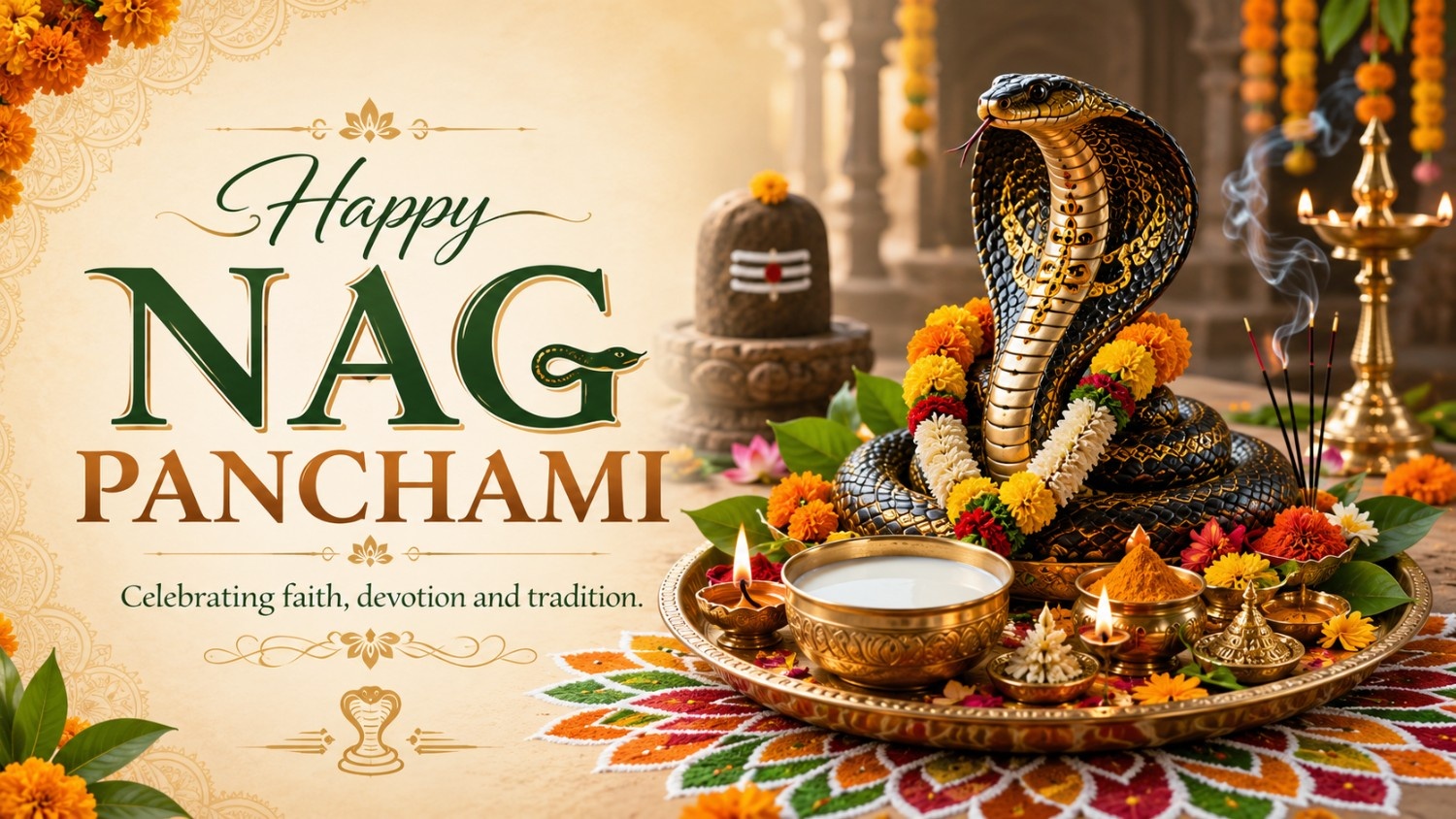
1. Happy Nag Panchami 2026 Images
Create a festive greeting image featuring:
A symbolic Nag Devta illustration
Lord Shiva in the background
Temple bells or a diya
A blue, gold or saffron festive theme
The text “Happy Nag Panchami 2026”
The Hindi text “नाग पंचमी की हार्दिक शुभकामनाएं”
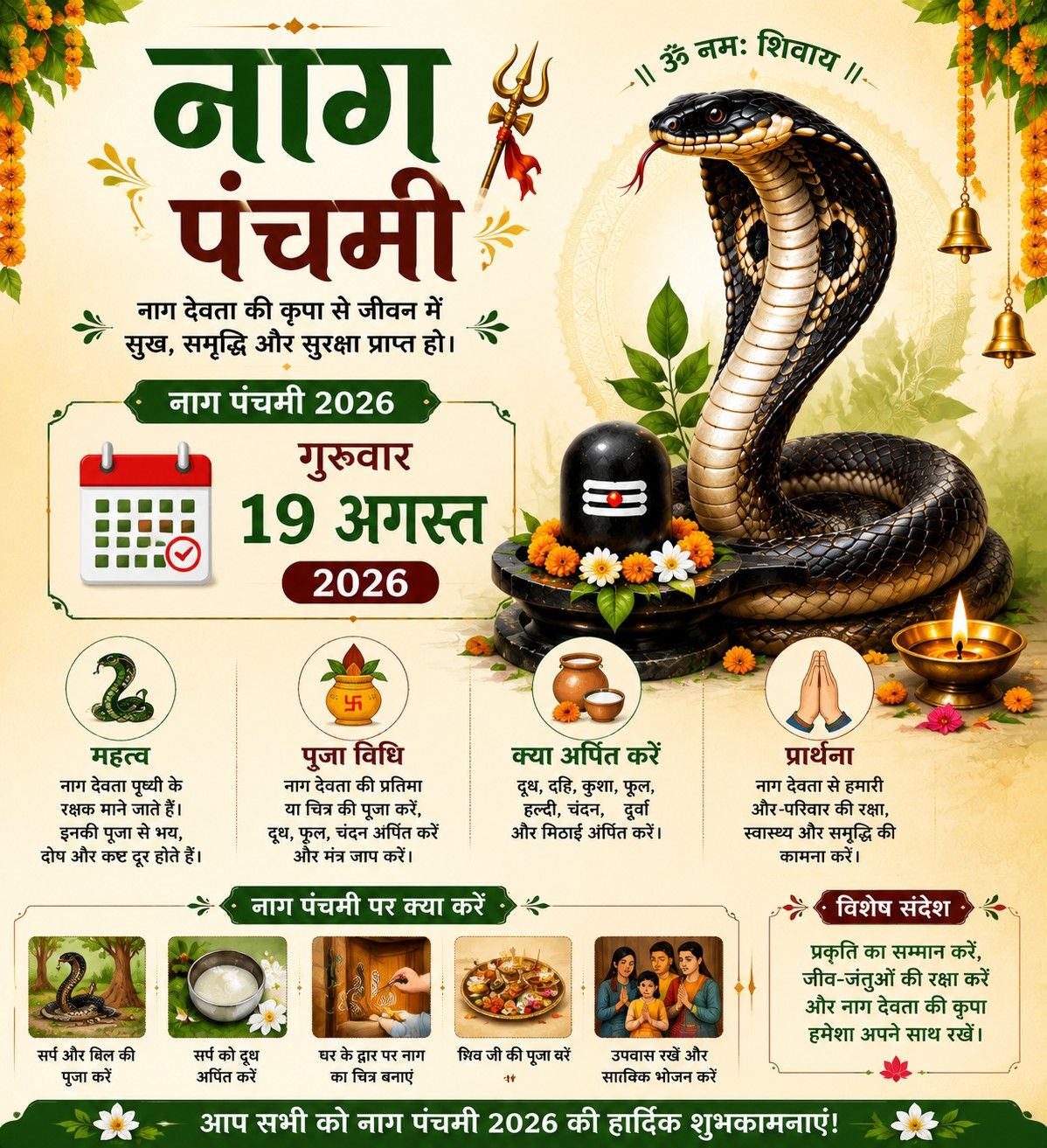
2. Nag Panchami Date 2026 Poster
Create an informational Nag Panchami poster containing:
Monday, 17 August 2026
Panchami tithi timings
New Delhi puja muhurat
A reminder to check local Panchang timings
A wildlife-friendly celebration message
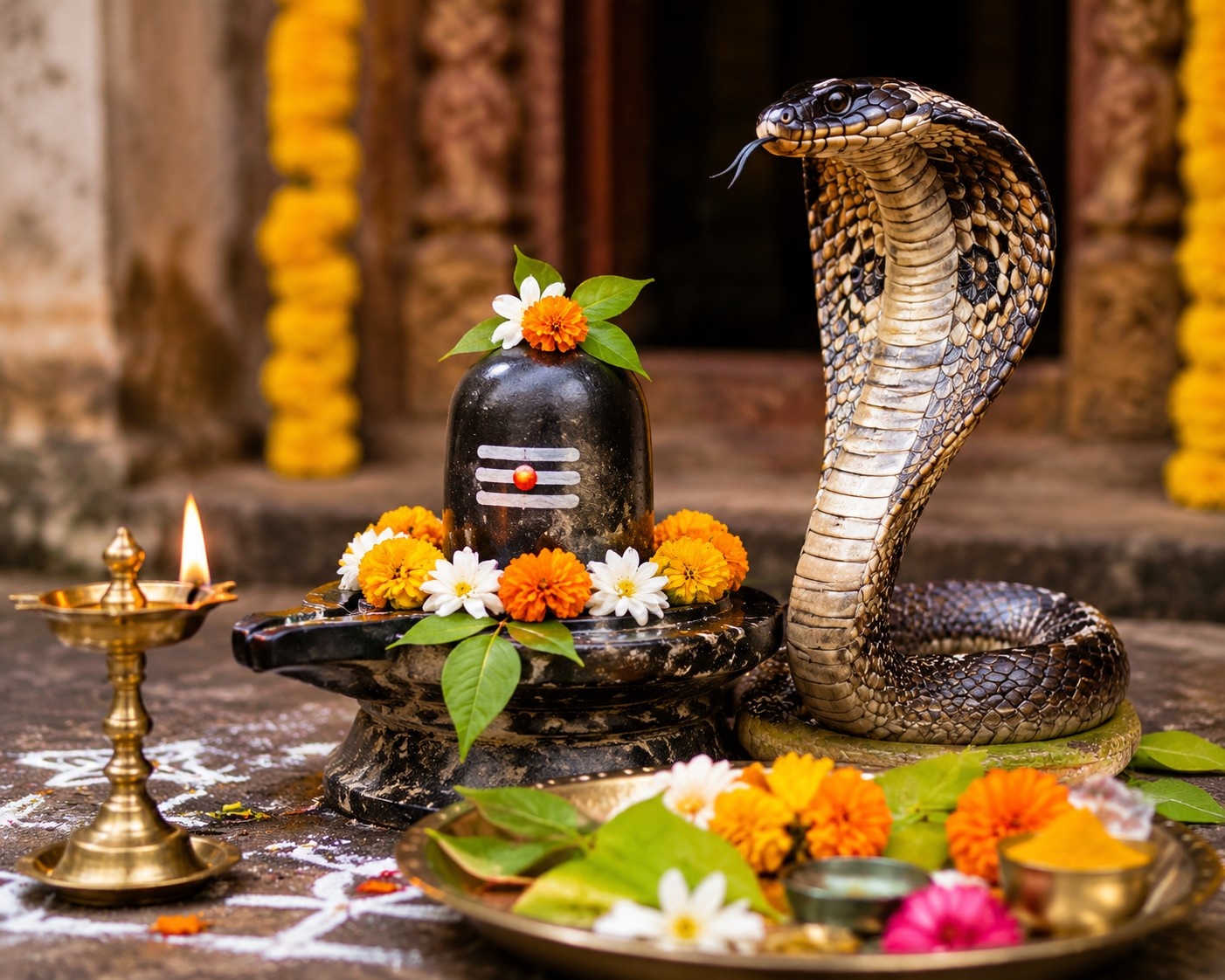
3. Nag Panchami Photo HD
Use a high-resolution photograph of:
A Shiva temple decorated for Shravan
A symbolic stone or metal Nag Devta idol
Flowers, diya and puja decorations
An eco-friendly home puja arrangement
Avoid using photographs that show a captured or distressed snake.
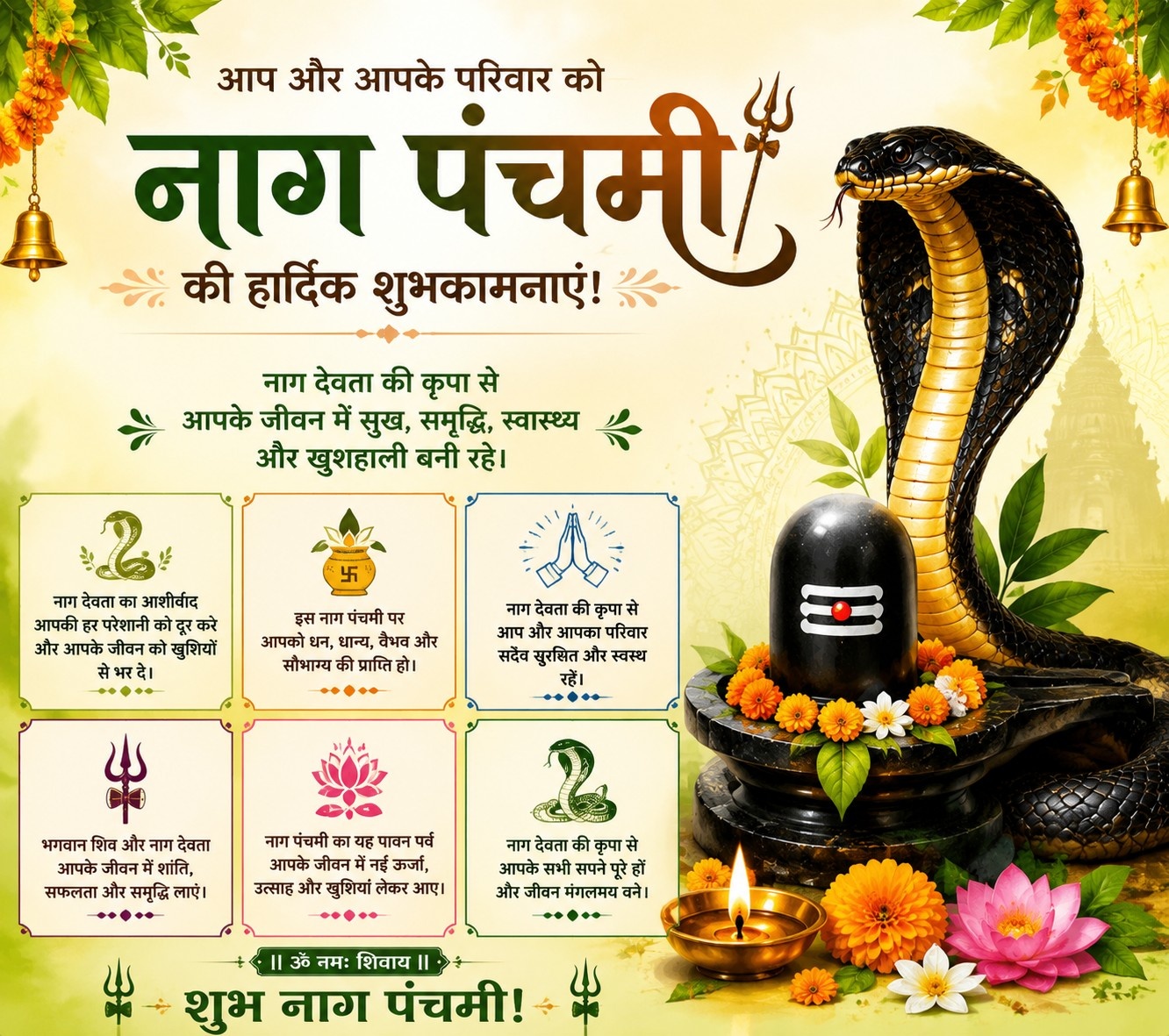
4. Nag Panchami Wishes in Hindi Image
Use a short Hindi greeting such as:
“भगवान शिव और नाग देवता की कृपा आपके परिवार पर सदैव बनी रहे। शुभ नाग पंचमी।”
Nag Panchami Drawing Ideas
Nag Panchami drawing activities are popular among children, schools and families.
Simple drawing ideas include:
Lord Shiva with a symbolic cobra around his neck
A Nag Devta idol decorated with flowers
A child performing a wildlife-friendly puja
A cobra under a protective tree canopy
Nag Devta with a diya, kalash and lotus flowers
A “Save Snakes, Save Nature” awareness drawing
Krishna and Kaliya Nag
An ornamental five-hooded serpent design
Children should be encouraged to represent snakes respectfully and understand their importance in nature.
Nag Panchami Rangoli Ideas
A Nag Panchami rangoli can be created near the puja area using natural or reusable materials.
Popular designs include:
A simple five-hooded Nag Devta rangoli
Nag Devta with an Om symbol
Lord Shiva’s trishul with a serpent pattern
A lotus surrounded by decorative snake motifs
Nag Devta with the words “ॐ नमः शिवाय”
A circular floral rangoli with symbolic serpent shapes
A small rangoli featuring “शुभ नाग पंचमी”
A child-friendly dotted Nag Panchami rangoli
Use flower petals, rice flour, turmeric or reusable rangoli colours where possible. Avoid toxic materials that could harm animals or contaminate soil and water.
Suggested image file name:
easy-nag-panchami-rangoli-design.jpg
Suggested alt text:
Easy Nag Panchami rangoli design with Nag Devta and flowers
Conclusion
Nag Panchami is a sacred celebration of faith, protection, nature and compassion. In 2026, the festival will be observed on Monday, 17 August, in most parts of India. The New Delhi puja muhurat is from 5:51 AM to 8:29 AM, although timings should always be checked according to the devotee’s location.
Celebrate Nag Panchami 2026 by worshipping a symbolic image or idol, reading the traditional vrat katha, sharing wishes with loved ones and respecting snakes in their natural habitat.
FAQs on Nag Panchami 2026: Date, Puja Time, Significance, Wishes and Images
1. Nag Panchami kab hai?
Nag Panchami 2026 mein 17 August, Monday ko hai. In Hindi: नाग पंचमी सोमवार, 17 अगस्त 2026 को है।
2. Nag Panchami kis tarikh ko hai?
In most parts of India, Nag Panchami is on 17 August 2026. Gujarat will observe Nag Pancham on 1 September 2026.
3. 2026 me Nag Panchami kab hai?
2026 में नाग पंचमी सोमवार, 17 अगस्त को मनाई जाएगी। नई दिल्ली के लिए पूजा का शुभ समय सुबह 5:51 बजे से 8:29 बजे तक है।
4. What is the Nag Panchami 2026 date?
The Nag Panchami 2026 date is Monday, 17 August 2026, for most Indian regions.
5. What is the Nag Panchami 2026 date and time?
For New Delhi, Panchami tithi begins at 4:52 PM on 16 August 2026 and ends at 5:00 PM on 17 August 2026. The puja muhurat is from 5:51 AM to 8:29 AM on 17 August.
6. Why is Nag Panchami celebrated?
Nag Panchami is celebrated to honour Nag Devta and pray for protection, prosperity and family welfare. The festival also reflects traditional respect for snakes, agriculture and the natural environment. How is Nag Panchami puja performed?
Devotees clean the puja area, install an image or idol of Nag Devta, light a diya, offer flowers and akshat, chant prayers, read the vrat katha and distribute prasad. Puja customs vary by family and region.
7. What can be written on a Nag Panchami poster?
A Nag Panchami poster can include the festival date, puja time, a short prayer, “Happy Nag Panchami 2026,” “नाग पंचमी की हार्दिक शुभकामनाएं” and a message encouraging wildlife-friendly worship.
8. Which mantra can be chanted on Nag Panchami?
A simple mantra is “Om Nag Devatabhyo Namah”, meaning salutations to the serpent deities. Devotees may also chant “Om Namah Shivaya.”
9. What are some simple Nag Panchami drawing ideas?
Children can draw Lord Shiva, a symbolic Nag Devta, Krishna and Kaliya, a temple puja scene or a wildlife-awareness poster carrying the message “Save Snakes, Save Nature.”



