



Why is World Kindness Day Observed Globally?
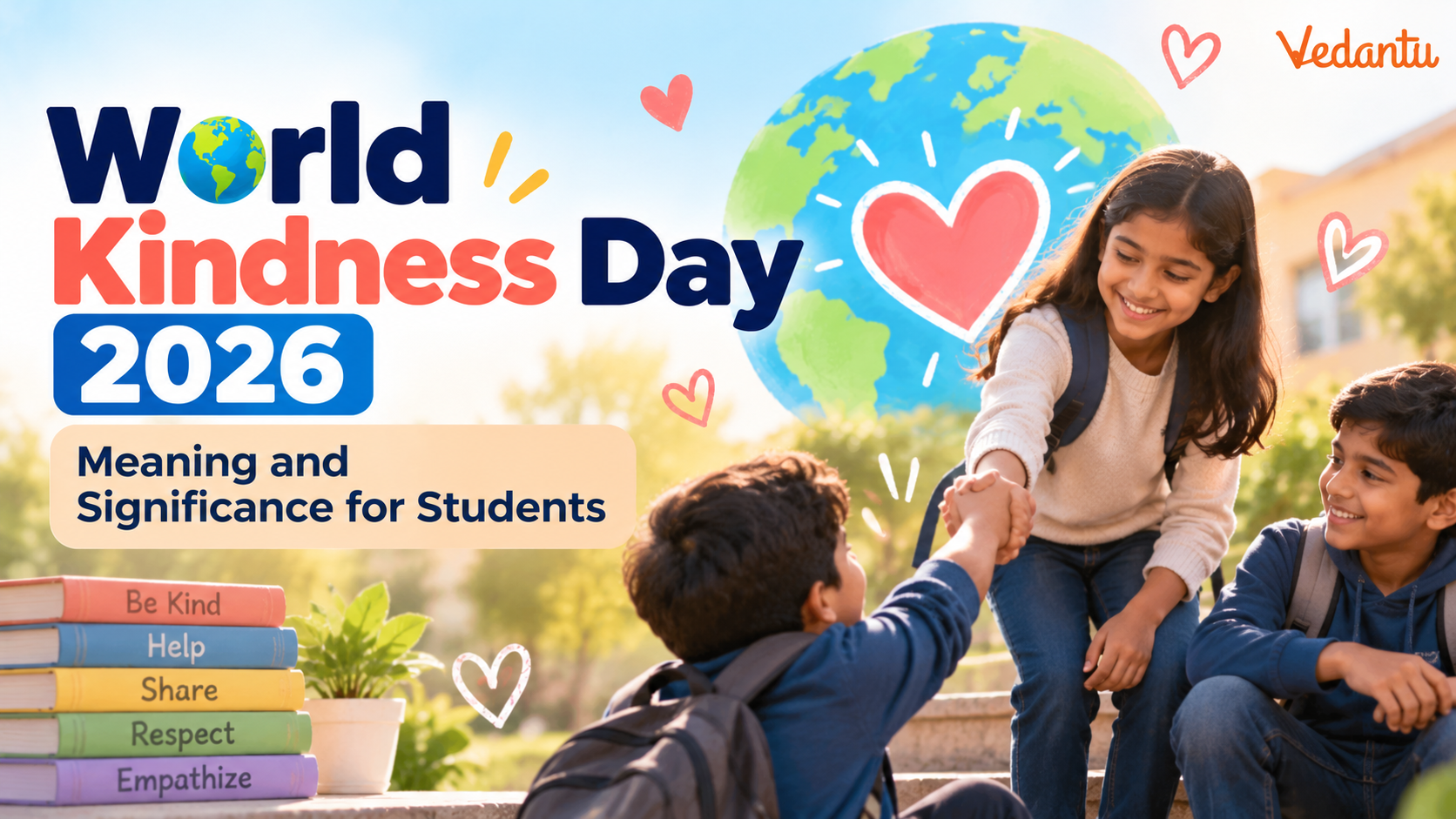
World Kindness Day is observed on 13 November every year; in 2026, it falls on Friday. The occasion encourages people to turn care for others into everyday action, from including a classmate to helping a neighbour with their permission. Associated with the World Kindness Movement, it highlights kindness across national, cultural and religious differences. For students, its value lies in learning that respectful behaviour includes listening, fairness and standing up against exclusion, not simply exchanging cheerful messages.
World Kindness Day 2026: Key Facts
| Particular | Details |
|---|---|
| Date in 2026 | Friday, 13 November 2026 |
| Annual date | 13 November in the Gregorian calendar |
| Type of occasion | International awareness observance encouraging kindness |
| Organisational origin | World Kindness Movement; the day was introduced in 1998 |
| Participation | Voluntary activities by individuals, schools, workplaces and community groups |
| Holiday status in India | Not a nationwide public holiday |
Why Is World Kindness Day Celebrated on 13 November?
The observance grew out of international cooperation between organisations promoting kindness. In 1997, representatives of kindness organisations gathered in Tokyo, Japan, at a conference that helped lay the groundwork for the World Kindness Movement. The choice of 13 November recalls the opening of that gathering.
The World Kindness Movement introduced World Kindness Day in 1998. These are distinct milestones: the 1997 meeting brought groups together, while the annual observance began the following year. Its purpose is to draw attention to the good people can do across boundaries and encourage practical cooperation rather than treating kindness as only a private virtue.
Why Kindness Matters Beyond One Day
Kindness means noticing another person's needs and responding with consideration. It can involve generosity, but it does not require buying gifts or donating money. Explaining instructions patiently, pronouncing someone's name correctly and making room for a quieter student in a discussion are equally meaningful examples.
The day also creates an opportunity to examine behaviour that is sometimes dismissed as harmless. Repeated teasing, excluding someone from a group or forwarding an embarrassing photograph can hurt others even when described as a joke. A useful school discussion asks not only whether an action was intended kindly, but also how it affected the person receiving it.
Kindness does not mean accepting bullying, keeping unsafe secrets or agreeing to every request. Students can set boundaries and seek help from a trusted adult. Respectful support also protects dignity: ask before helping, accept a refusal and never make someone's difficulty into publicity without their consent.
Understanding the 2026 Theme and What to Wear
Treat claims about an official World Kindness Day 2026 theme cautiously. A slogan shared by a school, charity or social-media account is not necessarily a worldwide campaign theme. Before printing an official theme on event materials, check the World Kindness Movement's current announcements and identify the organisation responsible for the wording. A class can choose its own focus, such as “Kindness in everyday choices”, provided it is labelled as a classroom theme rather than an official one.
No particular clothing colour is required to participate in World Kindness Day. Individual organisers may choose a colour for their campaign, so follow the school's or group's instructions if there is a dress code. Otherwise, normal school uniform or everyday clothing is appropriate; participation should not depend on buying something new.
Meaningful Ways to Observe the Day at School and Home
There is no single ceremony that all participants follow. Schools and community groups can organise activities suited to their setting, while families can choose small, practical acts of care. The following are suggestions, not prescribed customs or official campaign requirements.
- Make group work more inclusive: Rotate roles so that every student gets a chance to speak, record ideas and present. Invite participation without forcing a shy classmate into the spotlight.
- Practise asking before helping: Use a short role-play in which students ask, “Would you like some help?” and learn to respect both yes and no.
- Offer specific appreciation: Write a note explaining how someone's action helped you. Thank school support staff respectfully without expecting photographs or public responses.
- Improve digital behaviour: Agree not to forward humiliating images or pile onto hurtful comments in class groups. Report bullying through a trusted adult or the appropriate school channel.
- Plan a needs-led collection: With adult supervision, ask a local organisation what it actually needs before collecting books or supplies. Check that donated items are usable.
- Share responsibilities at home: Take on an agreed household task, listen without interrupting or help a family member with something they find difficult.
In an Indian classroom, useful examples include welcoming a student who speaks a different home language, avoiding jokes about accents and explaining unfamiliar school routines to a newcomer. These actions connect kindness with equal participation. A follow-up discussion a week later can explore what changed, without ranking students by how “kind” they appeared.
World Kindness Day Poster Ideas
A useful poster combines the occasion, the date and one clear action. Write “World Kindness Day — 13 November 2026” prominently, then choose a short message that can be understood at a glance. The following original concepts can be drawn by students using simple classroom materials.
- Make space for someone: Draw a group opening its circle to include another student. Add the line, “An invitation can change someone's day.”
- Pause before you post: Draw a phone screen with a pause symbol. Use the message, “Protect dignity, online too.”
- Ask. Listen. Respect. Show two students talking at eye level. Add, “Good intentions begin with listening.”
- Kindness without a price tag: Illustrate someone sharing time or explaining a task. Use the line, “You do not need to buy something to care.”
Use readable lettering and strong colour contrast. Avoid using identifiable photographs of people receiving help without permission, and do not label an original poster slogan as the official annual theme.
Original World Kindness Day Quotes and Messages
These original lines can be used in greeting cards, assembly slides, captions or classroom displays. They are not quotations attributed to historical figures.
- “Kindness begins when we notice who has been left out.”
- “Offer help with respect, and leave room for a no.”
- “A patient explanation can be an act of kindness.”
- “Make your group a place where someone new can belong.”
- “Be thoughtful in the messages you send and the rumours you do not share.”
- “Celebrate kindness today; practise it when no one is watching.”
Summary
World Kindness Day falls on Friday, 13 November 2026. Introduced by the World Kindness Movement in 1998, it encourages considerate action across differences. Students can participate through inclusive group work, respectful communication and practical help that protects another person's dignity. Choose one manageable action and continue it beyond the day. For posters and school programmes, distinguish original slogans and local dress codes from any officially attributed campaign guidance.
FAQs on World Kindness Day 2026: Meaning and Significance for Students
1. What is World Kindness Day?
World Kindness Day is a global observance dedicated to promoting acts of kindness, compassion, and goodwill among people. It encourages individuals and communities to make the world a better place through small, thoughtful actions.
2. When is World Kindness Day celebrated?
World Kindness Day is celebrated every year on 13 November in many countries, including India.
3. Why do we celebrate World Kindness Day?
World Kindness Day is celebrated to promote kindness and empathy in society. By encouraging both individual and group acts of kindness, the day aims to build a more compassionate world and inspire positive connections among people.
4. How did World Kindness Day start?
World Kindness Day was first introduced in 1998 by the World Kindness Movement, a coalition of non-governmental organizations from across the globe, with the goal of inspiring more acts of kindness worldwide.
5. How can students celebrate World Kindness Day?
Students can celebrate World Kindness Day by engaging in helpful and caring actions at school and home.
- Share kind notes or compliments with classmates.
- Help someone in need or include others in activities.
- Create posters with positive messages about kindness.
6. What is the significance of 13 November for World Kindness Day?
World Kindness Day is observed on 13 November to mark the founding of the World Kindness Movement and to encourage everyone worldwide to participate in spreading kindness on this date.
7. Is there a specific theme for World Kindness Day 2026?
As of now, the official theme for World Kindness Day 2026 has not been announced. Usually, each year highlights a unique message related to kindness, declared by the World Kindness Movement or other organizing bodies.
8. What are some inspiring World Kindness Day quotes?
Inspiring quotes for World Kindness Day remind us of the power of small actions. Examples include: “Kindness is a language which the deaf can hear and the blind can see.” — Mark Twain and “No act of kindness, no matter how small, is ever wasted.” — Aesop.
9. What color is associated with World Kindness Day?
The color yellow is often associated with World Kindness Day, symbolizing positivity and warmth. People sometimes wear yellow clothes or accessories to promote the message of kindness.
10. What are some World Kindness Day poster ideas for students?
Posters for World Kindness Day can creatively display kindness and positive messages.
- Draw hands reaching out to help others.
- Use bright colors and inspirational kindness quotes.
- Show examples of kind acts like sharing or caring for the environment.
11. Is World Kindness Day a public holiday in India?
World Kindness Day is not a public holiday in India. However, many schools and organizations mark this day with special activities or events to highlight the importance of kindness.
12. How can families participate in World Kindness Day?
Families can participate in World Kindness Day by performing simple, thoughtful deeds together.
- Help a neighbor or donate unused items.
- Write thank-you notes to community helpers.
- Spend quality time together and express appreciation for one another.


